
Canada EV Rebate by Province
The Canada EV rebate is the federal EVAP: $5,000 off a new electric car ($2,500 plug-in hybrid) in 2026, $4,000 from January 1, 2027, on deals up to $50,000. Here is what each province and territory adds.
Electric Vehicle Incentives in Canada by Province and Territory
| Province or territory | Status | New electric | New plug-in hybrid | Used | Federal + provincial, new electric | Provincial price cap | EV fee |
|---|---|---|---|---|---|---|---|
| Ontario (ON) | Ended since July 11, 2018 | $0 | $0 | $0 | $5,000 | None | None |
| Quebec (QC) | Open, until December 31, 2026; the dealer takes it off | $2,000 | $1,000 | $1,000 | $7,000 | $65,000 | $125 a year from 2027 |
| British Columbia (BC) | Paused since May 15, 2025 | $0 | $0 | $0 | $5,000 | None | None |
| Alberta (AB) | None | $0 | $0 | $0 | $5,000 | None | $200 a year |
| Manitoba (MB) | Open, extended in Budget 2026; apply to MPI after you buy | $4,000 | $4,000 | $2,500 | $9,000 | $70,000 | None |
| Saskatchewan (SK) | None | $0 | $0 | $0 | $5,000 | None | $300 a year |
| Nova Scotia (NS) | Ended | $0 | $0 | $0 | $5,000 | None | $500 every two years ($250 plug-in hybrid) |
| New Brunswick (NB) | Ended since July 1, 2025 | $0 | $0 | $0 | $5,000 | None | None |
| Prince Edward Island (PE) | Paused since April 2026 | $0 | $0 | $0 | $5,000 | None | None |
| Newfoundland and Labrador (NL) | Ended since March 15, 2026 | $0 | $0 | $0 | $5,000 | None | None |
| Yukon (YT) | Ended since March 31, 2026 | $0 | $0 | $0 | $5,000 | None | None |
| Northwest Territories (NT) | Paused | $0 | $0 | $0 | $5,000 | $55,000 | None |
| Nunavut (NU) | None | $0 | $0 | $0 | $5,000 | None | None |
Everything in this table assumes a brand-new electric car, running on batteries alone, bought during 2026. A few provinces also bill electric vehicle owners a yearly fee, which raises what it costs to keep one.
Quebec handles its rebate through Roulez vert for a new electric car you register in 2026. Manitoba's 2026 budget stretched its rebate beyond March 31, 2026.
Federal + provincial assumes a car on Transport Canada's list with a final price of $50,000 or less (no limit if it is built in Canada); Quebec pays only on cars listed at $65,000 or less and Manitoba pays only on cars listed at $70,000 or less.
Download: ev-rebates-by-province.csv · federal amounts on the federal EV rebate page
Which Cars Can Earn Electric Car Incentives in Canada?
To qualify, a car has to be new, built in Canada or in a country that has a free-trade agreement with Canada, weigh under 8,500 pounds, and be highway-capable. A free-trade agreement simply means a trade deal Canada has struck with another country. A demonstrator, a car the dealer has taken on test drives, still counts as new below 10,000 km.
The final transaction value can't go over $50,000. That figure covers the entire deal, not just the sticker price. Cars built in Canada escape the cap entirely.
Transport Canada maintains a list of eligible cars. We've priced 33 models and 111 trims from that list. Here are the lowest prices once the federal rebate is applied:
Tesla appears just once, with the Model Y RWD. The 2027 Tesla Model 3 Premium RWD is cheaper at $39,490, yet it's absent from the list, so no federal rebate applies.
A few popular models miss the list and sit above the price limit too, which means no federal rebate for them:
| Car | Type | Range | MSRP | Federal | After federal rebate | After rebates in Quebec (QC) | After rebates in Manitoba (MB) |
|---|---|---|---|---|---|---|---|
 2027 Nissan LEAF S | Electric | 488 km | $34,998 | $5,000 | $29,998 | $27,998 | $25,998 |
 2027 Kia EV3 Light FWD | Electric | 356 km | $36,995 | $5,000 | $31,995 | $29,995 | $27,995 |
| 2026 Kia EV4 Light | Electric | 552 km | $38,995 | $5,000 | $33,995 | $31,995 | $29,995 |
 2025 FIAT 500e Red | Electric | 227 km | $39,995 | $5,000 | $34,995 | $32,995 | $30,995 |
| 2025 Kia Niro PHEV LX | Plug-in hybrid | 55 km | $36,795 | $2,500 | $34,295 | $33,795 | $30,295 |
 2026 Toyota Prius Plug-in Hybrid SE | Plug-in hybrid | 72 km | $40,150 | $2,500 | $37,650 | $37,150 | $33,650 |
All 111 eligible trims with prices in every province
| Car | MSRP | Why |
|---|---|---|
 2027 Tesla Model 3 Premium RWD | $39,490 | Not on the list |
 2026 Hyundai IONIQ 5 Preferred RWD Long Range | $55,499 | Not on the list, and over the $50,000 cap |
 2026 Honda Prologue EX AWD | $59,990 | Not on the list, and over the $50,000 cap |
| 2026 Kia EV9 Light RWD | $59,995 | Not on the list, and over the $50,000 cap |
 2026 BMW i4 eDrive40 Gran Coupe | $64,990 | Not on the list, and over the $50,000 cap |
 2027 Polestar 2 Long Range Dual Motor | $69,900 | Not on the list, and over the $50,000 cap |
 2026 Cadillac LYRIQ 4dr Luxury | $70,399 | Not on the list, and over the $50,000 cap |
Federal EVAP rules
- Price cap: $50,000 on the deal's final price before tax, waived for cars built in Canada
- Made in: Canada, or a country that has a free-trade agreement with Canada
- Paperwork: none for you; the dealer deducts it at purchase or lease
- Limit: leases of 48 months or longer earn the full amount; one EVAP rebate for each person
Source: Transport Canada: EVAP overview · every federal rule explained
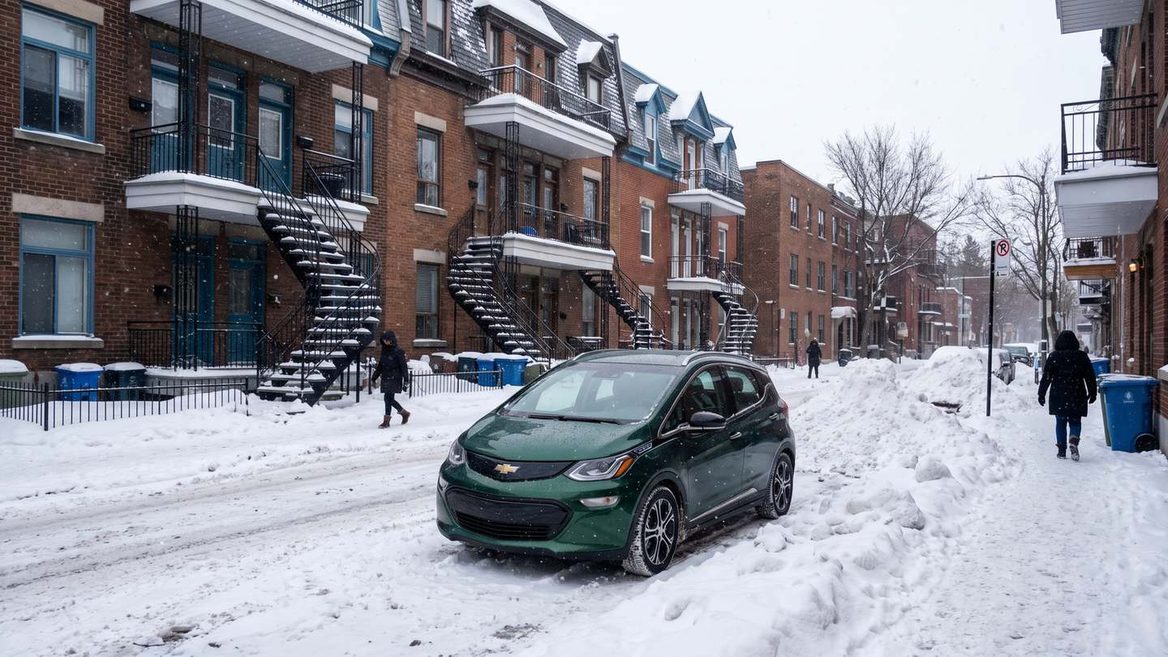
Wherever you live in Canada, the federal EV rebate will knock as much as $5,000 off the price of a new electric car you buy in 2026, right at the dealership. Its official name is the Electric Vehicle Affordability Program, shortened to EVAP. Transport Canada runs it; the program opened on February 16, 2026 and closes on March 31, 2031. Just two provinces put extra money of their own on the table, Quebec and Manitoba. Everywhere else, the federal rebate is the whole deal.
How Does the Federal Rebate Work?
It works as a rebate that comes straight off the price at the dealership; it isn't a tax credit. There's no federal EV tax credit in Canada, so your tax return has nothing to claim.
Your dealer makes sure both you and the car qualify, drops the price at purchase or lease, then recovers the money from Transport Canada. No paperwork lands on you.
Both fully electric cars and plug-in hybrids are eligible. A plug-in hybrid carries a battery you plug into an outlet plus a gas engine. Ordinary hybrids you can't plug in don't get the federal rebate.
How Big Is the Subsidy Each Year?
The rebate steps down as the years go by. What matters is the year your dealer files the eligibility check, not the car's model year and not your delivery date.
| Year | Rebate |
|---|---|
| 2026 | $5,000 on a fully electric car, $2,500 on a plug-in hybrid |
| 2027 | $4,000 and $2,000 |
| 2028 | $3,000 and $1,500 |
| 2029 | $3,000 and $1,500 |
| 2030 | $2,000 and $1,000 |
| 2031 | $2,000 and $1,000 |
How Does Leasing Change the Incentives?
Leases count too, though a shorter term means a smaller slice of the rebate. Terms of 48 months and up earn the full amount.
| Lease term | Share of the rebate | Electric car in 2026 | Plug-in hybrid in 2026 |
|---|---|---|---|
| 48 months and up | The full amount | $5,000 | $2,500 |
| 36 months | Three quarters | $3,750 | $1,875 |
| 24 months | Half | $2,500 | $1,250 |
| 12 months | One quarter | $1,250 | $625 |
Are the Incentives Still Around?
Yes. The federal rebate is live until March 31, 2031. It took over from iZEV, the previous federal program that offered up to $5,000 starting in May 2019.
iZEV ran dry and went on pause January 10, 2025, then shut down March 31, 2025. Between that date and February 16, 2026, no federal rebate existed.
EV Rebate Program Changes, from the iZEV Program to EVAP
| When | Where | What changed |
|---|---|---|
| January 1, 2027 | Federal | EVAP steps down to $4,000 and $2,000. |
| December 31, 2026 | Quebec | Roulez vert ends; a car registered in 2027 gets $0. |
| October 1, 2026 | Nova Scotia | Nova Scotia starts a $500 levy on electric cars ($250 on plug-in hybrids) at each two-year registration renewal. |
| April 2026 | Prince Edward Island | Prince Edward Island pauses its Electric Vehicle Incentive Program in the 2026 budget. |
| March 31, 2026 | Manitoba | Original end date; Budget 2026 extends the program. |
| March 31, 2026 | Yukon | Yukon electric transportation rebates end; claims for earlier purchases stay open for a year. |
| March 17, 2026 | Quebec | Home charger aid moves into the new Écorecharge program ($600). |
| March 15, 2026 | Newfoundland and Labrador | Deadline for Provincial EV Rebate Program applications. |
| February 16, 2026 | Federal | EVAP opens: up to $5,000 on an electric car and $2,500 on a plug-in hybrid. |
| January 1, 2026 | Quebec | Roulez vert falls to $2,000 for a new electric car and $1,000 for a used one. |
| December 31, 2025 | Nova Scotia | Efficiency Nova Scotia closes its multi-unit building charger rebate. |
| July 1, 2025 | New Brunswick | New Brunswick Electric Vehicle Incentive Program ends. |
| June 1, 2025 | Saskatchewan | Saskatchewan road use charge on electric vehicles rises from $150 to $300 a year. |
| May 22, 2025 | Nova Scotia | Last Electrify Nova Scotia light-duty EV rebate payments issued; the car rebate has ended. |
| May 15, 2025 | British Columbia | B.C. pauses the CleanBC Go Electric passenger vehicle rebate. |
| March 31, 2025 | Federal | iZEV closes for good. |
| March 27, 2025 | New Brunswick | New Brunswick announces its EV incentive will end July 1. |
| March 19, 2025 | Manitoba | Teslas and cars made in China bought after this date no longer qualify in Manitoba. |
| March 5, 2025 | Northwest Territories | NWT budget sets no money aside for EV rebates in 2025-26 (it had $153,000 the year before). |
| February 1, 2025 | Quebec | Roulez vert suspended until March 31, 2025; cars registered in that window get nothing. |
| January 10, 2025 | Federal | Transport Canada pauses iZEV once its funding is used up. |
| January 8, 2025 | Prince Edward Island | The Island incentive is reset: $4,000 on a battery-electric car, $2,000 on a plug-in hybrid. |
Questions People Ask
Is the rebate a one-time deal?
Each person is allowed a single federal rebate for the whole program. Businesses and organizations can claim as many as ten.
Do used electric cars get anything?
The federal money covers new cars alone. Manitoba stands alone in paying for a used electric car: $2,500.
Might the money run out?
The program holds $2.275 billion altogether. As of October 1, 2026, $1.92 billion remained. The old iZEV program did halt once its funding was gone.
What about buying in Quebec in 2027?
Quebec's Roulez vert money stops after December 31, 2026, so a vehicle registered the following year receives only the federal rebate. If you're in Quebec, registering before the end of 2026 could save you up to $2,000. Quebec will also begin charging EV owners $125 a year in 2027.